The Q4 update: Watches, review intelligence, a feature comparison matrix, permanent page monitoring and a new look
Our biggest release since launch. An improved dashboard, Watches you write in plain language, permanent monitoring of the competitor pages that already exist, review intelligence, a feature comparison matrix proven by the competitors' own docs, and a new visual identity.


The Q4 release brings everything in Parano.ai together in one Feed, adds Watches (tell us in a sentence what you care about and we send only that, by email or Slack), now also keeps the existing competitor pages you choose under daily watch and shows how they change over time, on top of the new pages we have always caught, brings competitor reviews from several sources into the product, and starts rolling out a feature comparison matrix where every cell is backed by a quote from the competitor's own site. Sign-up is now a two-minute setup, and the product, website and illustrations share one new visual identity.
This is the biggest release since we launched Parano.ai in June. Over the last few months we improved most of the product around one question: what does a busy person need to see about their competitors, and what can they safely ignore?
The short version: one Feed instead of many pages, alerts you describe in your own words, the existing competitor pages you choose kept under watch and every change to them shown before and after, what customers say about your competitors, a feature comparison you can trust, and a new look for all of it.
An enhanced app around one Feed
Everything starts in the Feed now. It opens with what was notable this week, then every competitor move grouped by day and by company. Each story says where it came from and why it matters to you, based on what we know about your own positioning.
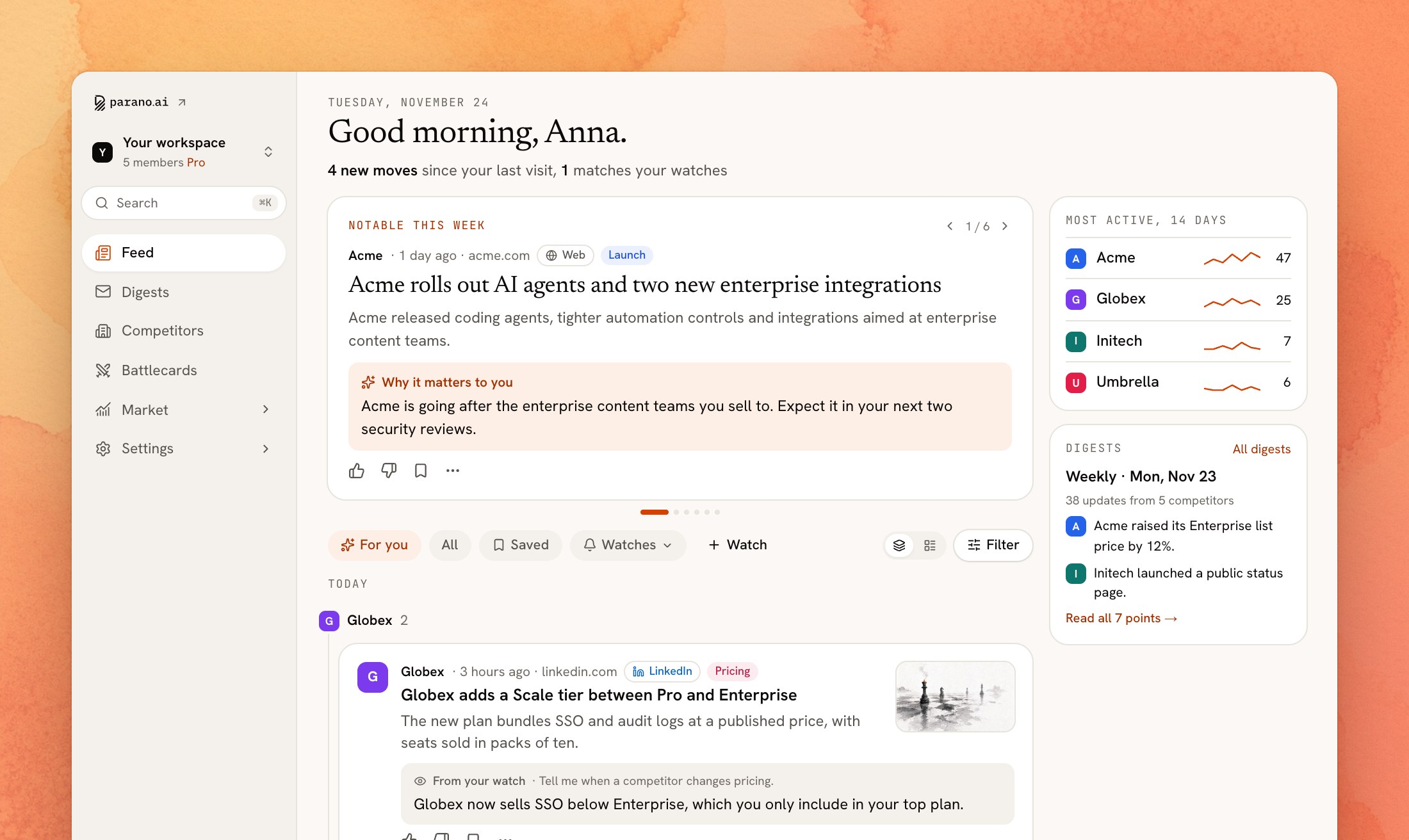
- For you puts the stories your Watches matched first and sinks the ones you marked as not relevant. All shows everything, Saved what you pinned.
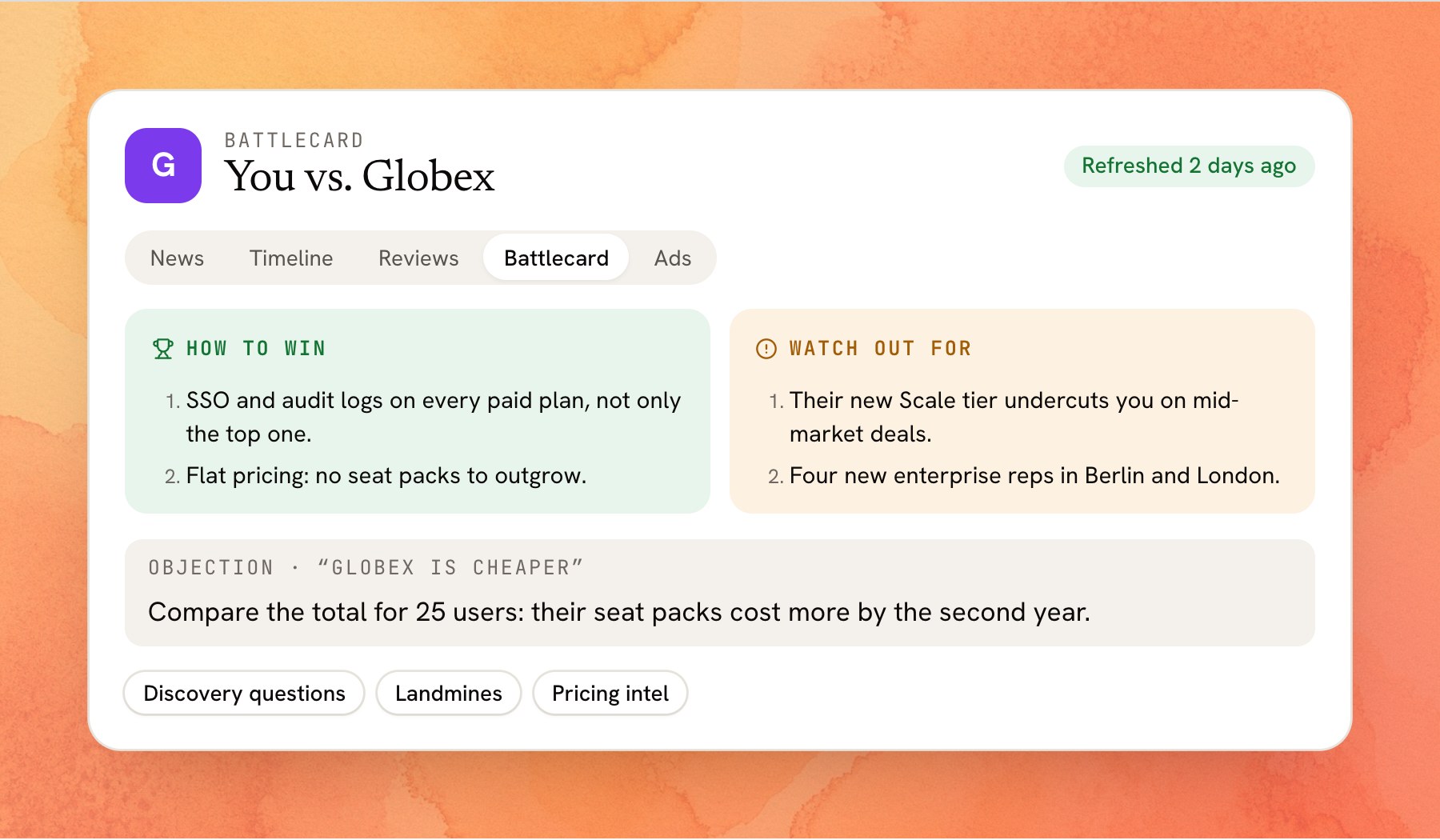
- Competitor profiles gather one company's news, timeline, reviews, battlecard and ads on tabs, so you no longer jump between pages to brief someone on a rival.
- Market has its own area: the strategic timeline, reviews across your market, the landscape, the benchmark and an all new and continuous feature comparison matrix.
- Ads show the ad. A story about a LinkedIn or Meta campaign now shows the creative itself, not only a summary of it.
- Battlecards sit in the main navigation and refresh as the competitor changes.
Watches: tell us what you care about, in a sentence
A digest is built for everyone on the team. A Watch is built for you. You write what you want to know, the way you would ask a colleague:
"Tell me when a competitor changes pricing or starts selling to enterprise teams, and how we compare."
Parano.ai turns that sentence into a few precise questions and checks every new story against them. When one matches, you get a short note with what happened and how it compares to your own offer, by email or as a Slack direct message, at the times you choose.
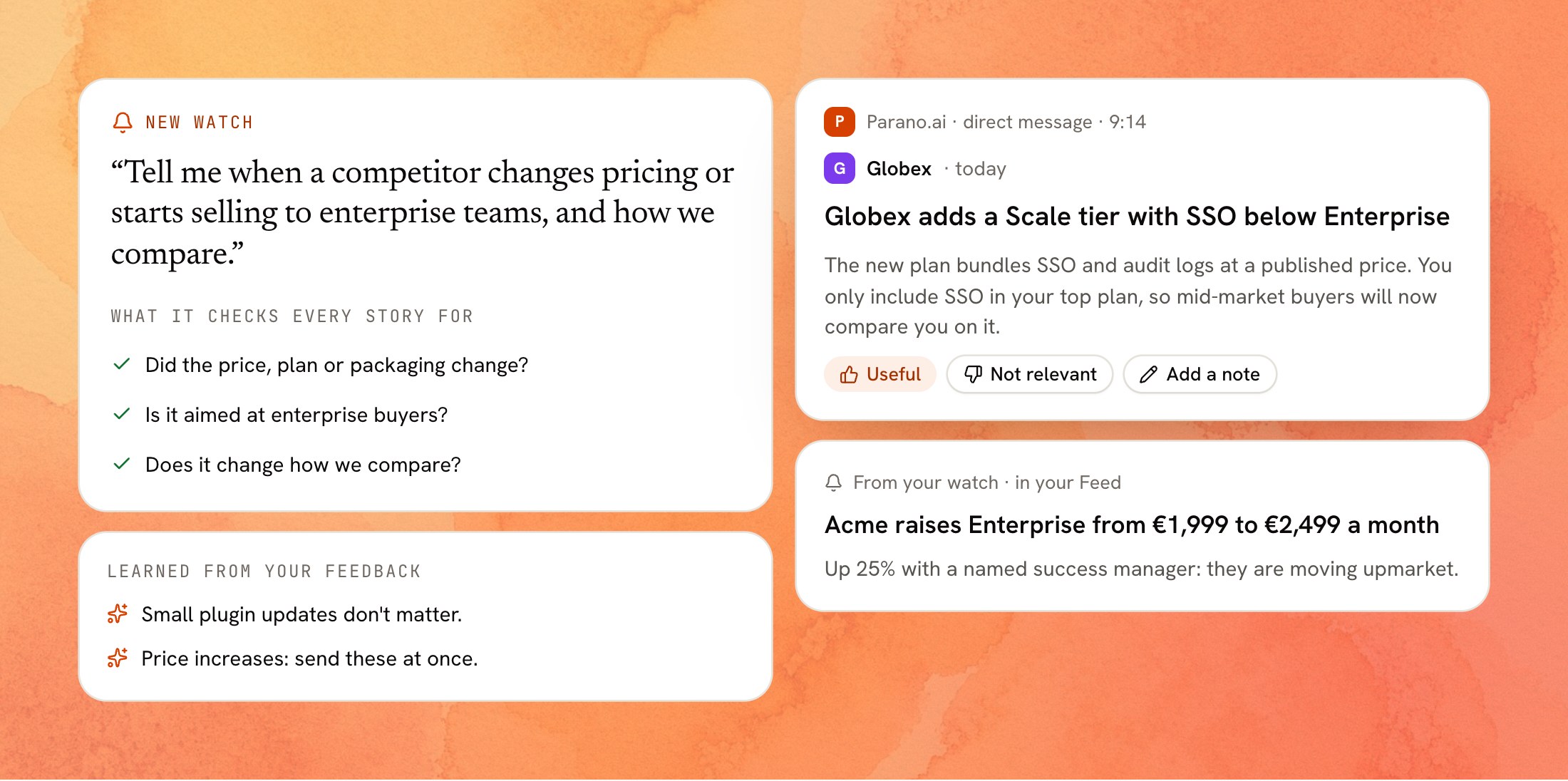
Watches learn from you. Mark a story useful or not relevant, or add a short note ("small plugin updates don't matter"), and the Watch keeps that as a rule. In Slack you can reply to the bot directly to pause a Watch or correct it. Every match also appears in your Feed under that Watch's chip, so nothing lives only in your inbox.
Review intelligence from several sources
What customers say about a competitor is often the earliest sign that something changed: support slowed down after a price increase, a feature everyone loved got worse, a new one starts getting praise.
We now collect ratings and reviews for your competitors from several sources every week and summarize what customers praise and complain about. You see every company on one scale, including your own, and how the ratings move.
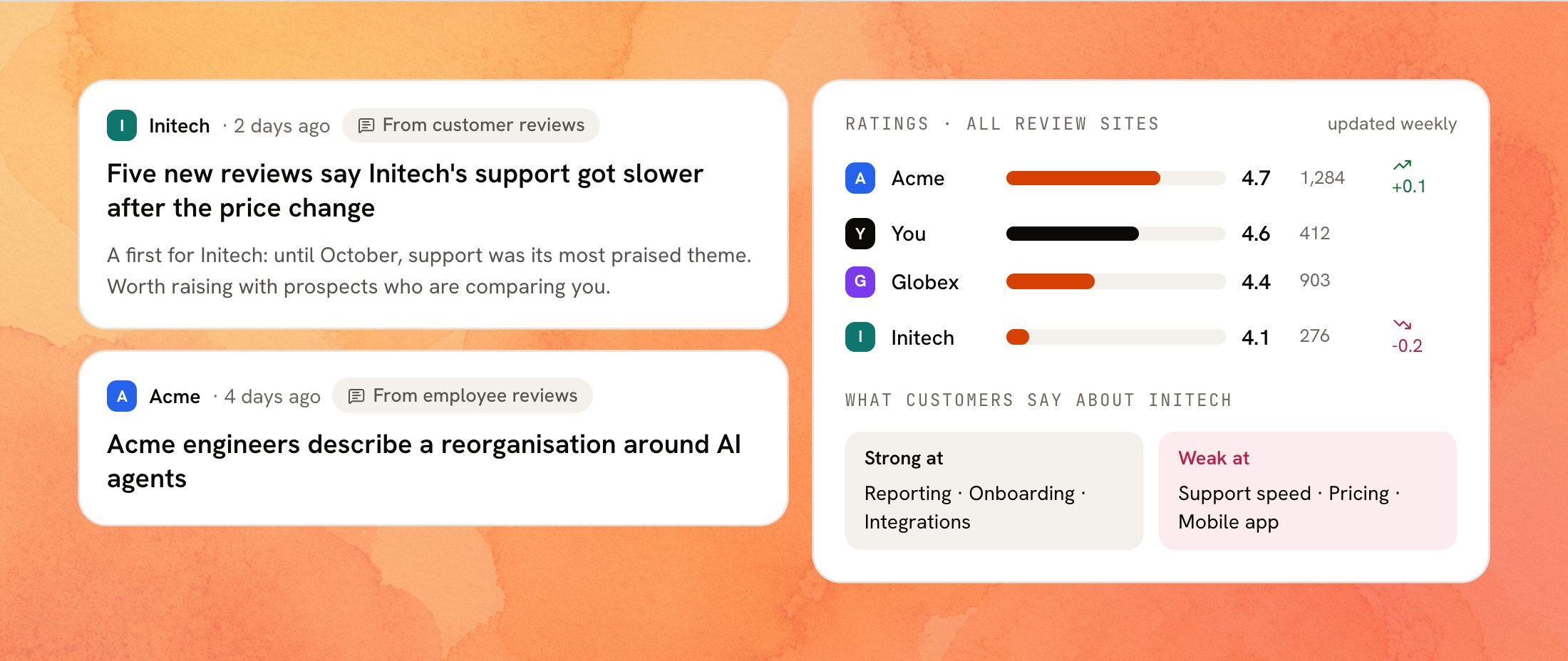
When reviewers start talking about something new, it becomes a story in your Feed in our own words, for example "Five new reviews say Initech's support got slower after the price change". We never copy review text; we tell you what changed and link you to the competitor's reviews.
The feature comparison matrix: what they offer, with proof
Comparison tables on the internet are mostly out of date or guessed. Ours is built differently. For each market there is one list of the features buyers compare. For every company and feature we read the competitor's own website and documentation, and a cell is only filled when a verbatim quote on their site supports it, including the plan it is on.
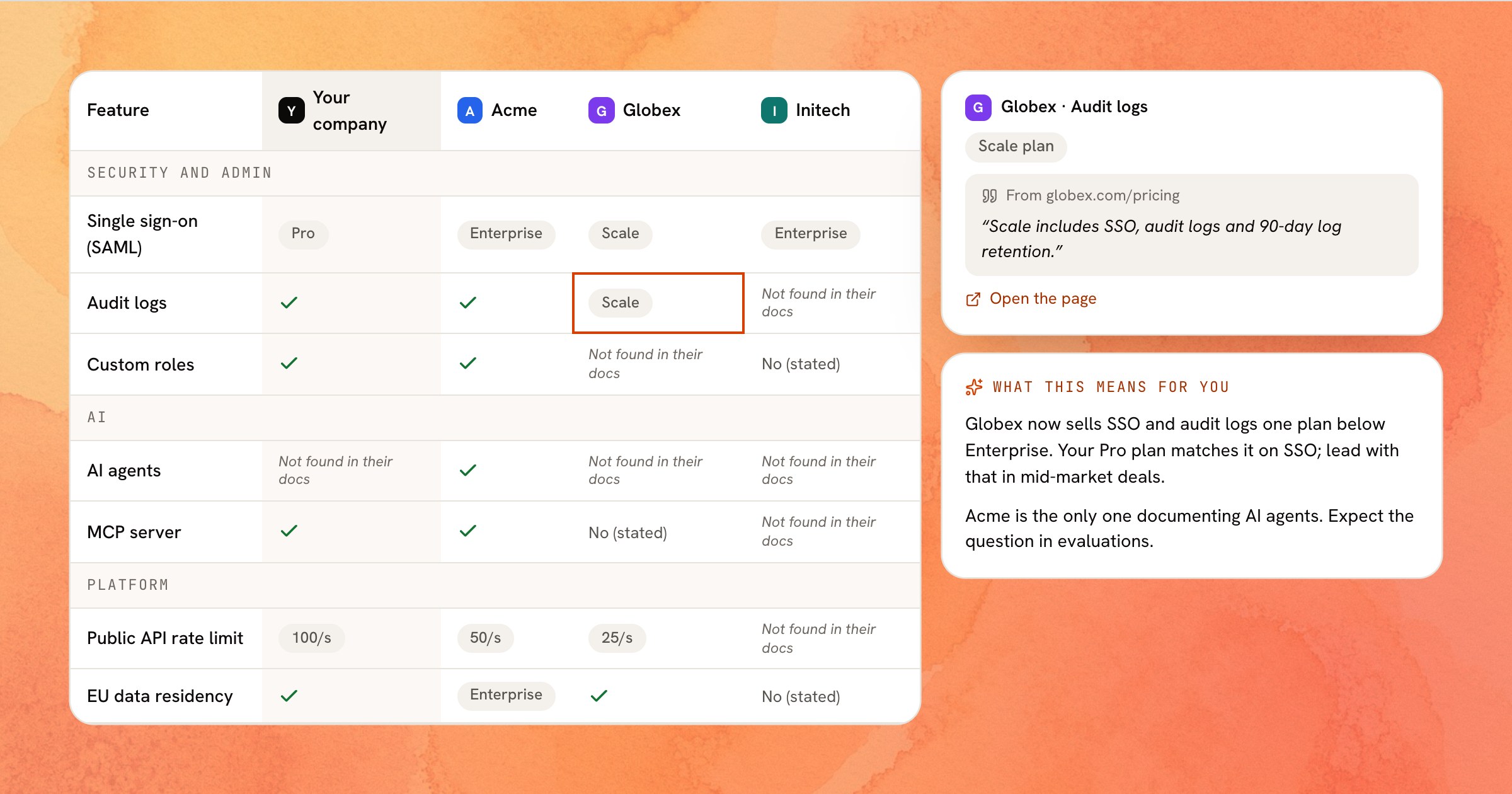
- Click any cell to read the quote and open the page it came from.
- "Not found in their docs" is not "missing". If we looked and found no statement, we say exactly that.
- Changes come to you. When a competitor moves a feature to another plan or starts documenting a new one, it shows up in your Feed.
- "What this means for you" reads the matrix against your own offer and names the gaps and advantages worth acting on.
The matrix is rolling out market by market, starting with headless CMS. If you want it for your market, tell us and we'll set up the feature list with you.
Permanent page monitoring: see how their pages change, before and after
From day one, Parano.ai has caught what competitors add to their websites: a new blog post, a new product page, a new case study. What a new page can't show you is a page that already exists changing quietly, and some of the most important moves happen exactly there. A competitor raises a price, drops its free plan or rewrites its homepage for a new audience, without publishing anything new.
Now you can keep existing competitor pages under permanent observation, such as their homepage or pricing page. We check each page every day and compare it with the last version, for as long as you monitor it, so you see how the page changes over time.
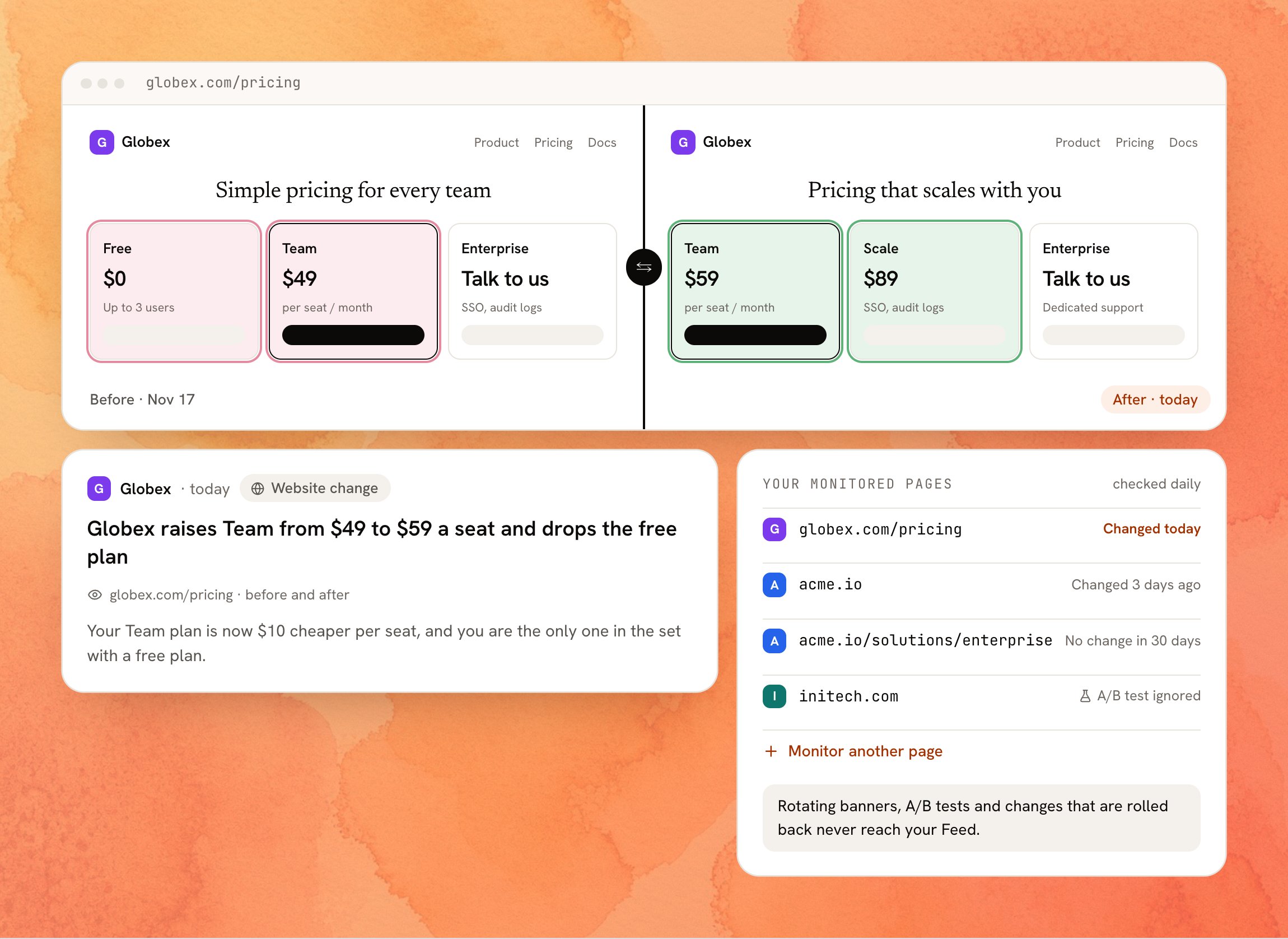
- Before and after, side by side. A change becomes a story in your Feed with what was removed and what was added, plus screenshots of both versions.
- Pick the pages that matter to you. Add any page on a competitor's site, from their homepage and pricing page to a product, solutions or careers page. To get you started, we suggest their homepage and pricing page, and find the pricing page even when it is not obvious.
- Only real changes. Websites change all the time: rotating banners, A/B tests, a price shown for a day and then rolled back. We wait until a change has settled and leave out the noise, so what reaches you is a decision the competitor actually made.
A welcome brief
Your first stories arrive within days, and you get a welcome brief: a summary of what your competitors did over the last 30 days, so the first week isn't empty. If you have told us your own company, we also build your first battlecard automatically.
A new visual identity
The product, the website and everything we send now share one look. Warm paper instead of grey, black ink, one ember-orange colour reserved for the action that matters, and a serif for headlines. The illustrations are ink-wash drawings of chess pieces, lighthouses and harbours: watching the board, from a distance, calmly.

It is more than paint. The app now runs on one set of components, so pages that used to look slightly different now behave the same way, read better on small screens and work properly in dark mode.
If you are already a customer, all of this is in your workspace today. If you're not, start a 14-day trial. No credit card, and your first briefing arrives within days. As always, tell us what's missing; most of this release started as a customer's question.
Frequently asked questions
What is new in Parano.ai's Q4 2026 release?
An enhanced app with one Feed, competitor profiles and a Market area; Watches, which turn a sentence into a personal alert; permanent page monitoring for existing competitor pages you choose, such as a homepage or pricing page, on top of the new pages we have always caught; review intelligence from several sources; a feature comparison matrix backed by quotes from competitors' own documentation, rolling out now; a two-minute setup; and a new visual identity across the product and website.
What is a Watch in Parano.ai?
A Watch is an instruction you write in plain language, such as 'Tell me when a competitor changes pricing and how we compare.' Parano.ai checks every new story against it, sends the matches by email or Slack direct message, and learns from your thumbs and notes which stories you don't want.
How does Parano.ai track changes on competitor websites?
Parano.ai has always caught the new pages a competitor publishes, such as a blog post, a product page or a case study. Permanent page monitoring adds the pages that already exist and change over time: you choose which ones to monitor, for example a homepage, a pricing page or a product page. We check each one every day and compare it with the last version, for as long as you monitor it. A real change becomes a story in your Feed with the before and after side by side. Rotating banners, A/B tests and changes that are rolled back are filtered out.
How does the feature comparison matrix decide whether a competitor has a feature?
Every filled cell is backed by a verbatim quote from a page on the competitor's own website, which you can open. If we looked and found no statement, the cell says 'Not found in their docs' rather than claiming the feature is missing.
Do existing customers need to do anything to get the update?
No. The new app, Watches and review intelligence are available in every workspace. The feature comparison matrix is being switched on market by market; ask us if you want it for yours.